nn
nn
Hormone Deficiency Symptoms in Men and Women
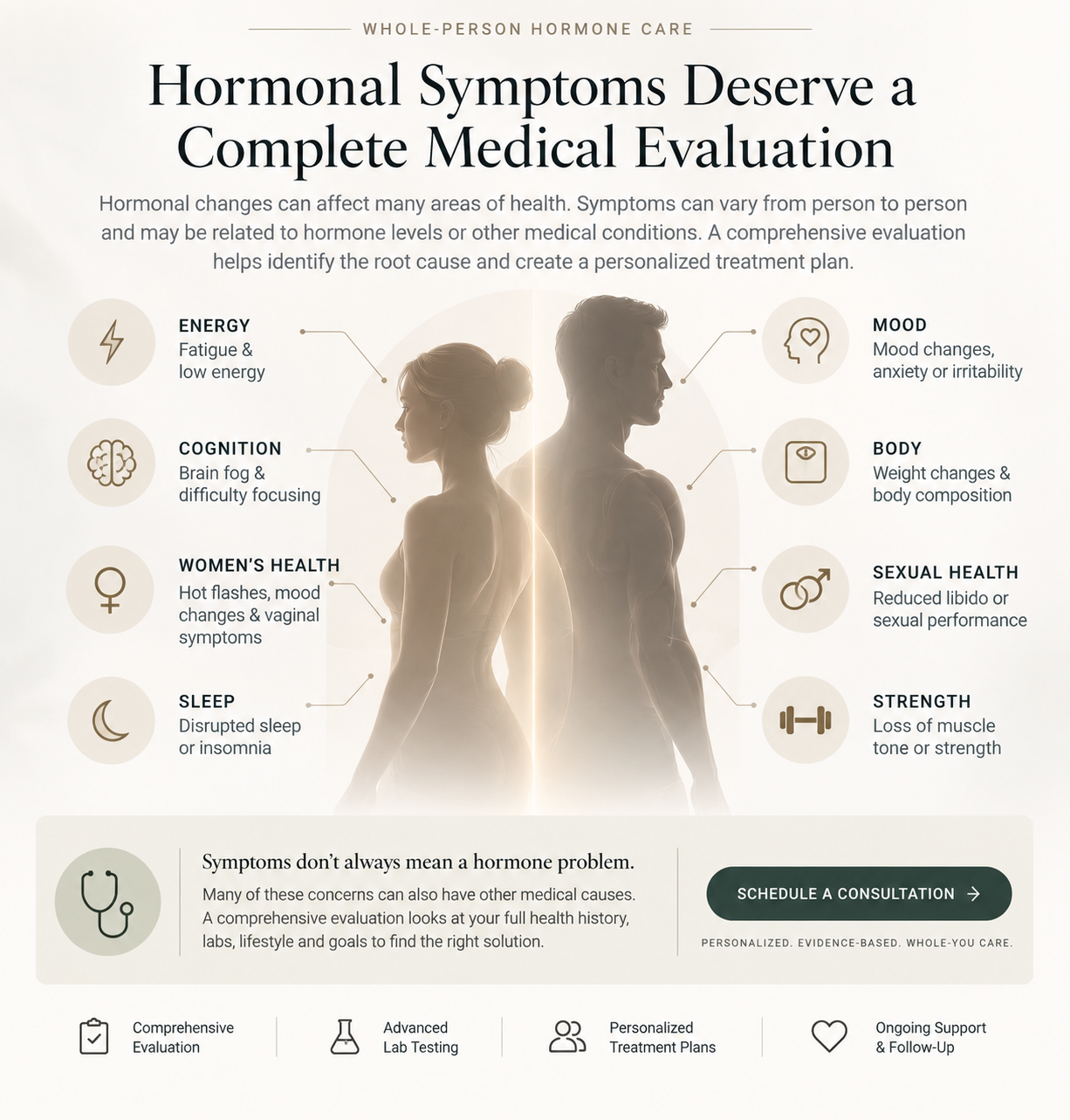
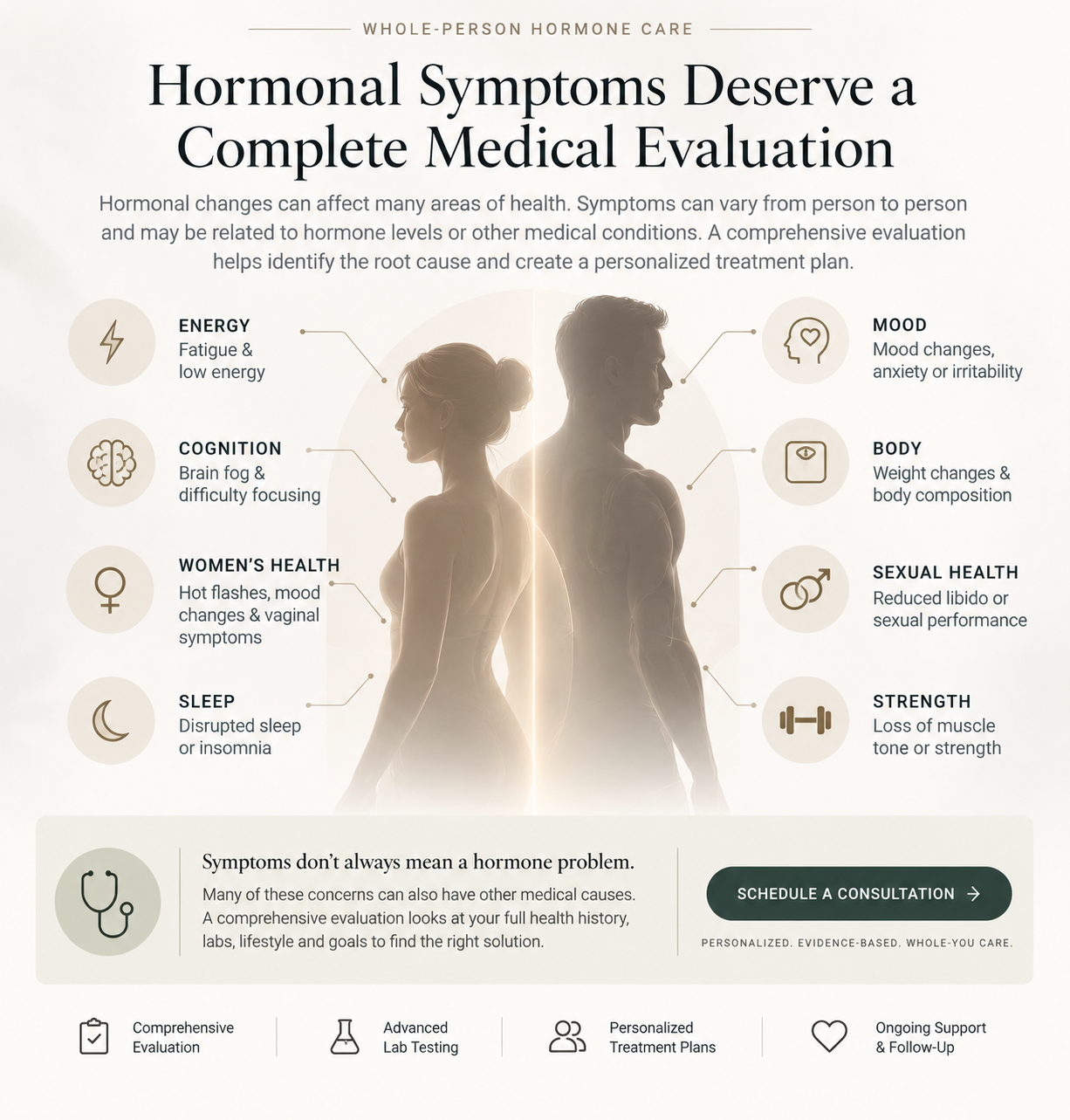
Hormone-related symptoms can affect energy, sleep, mood, sexual function, body composition, bone health, menstrual patterns, memory and quality of life. Because these symptoms can have many possible causes, a comprehensive medical evaluation can help determine whether a hormone imbalance or another medical condition may be contributing.
Find the Right Hormone Evaluation by Symptom
Hormone deficiency symptoms may overlap with sleep disorders, thyroid disease, medication effects, nutritional deficiencies, metabolic conditions and other medical concerns. Evaluation should be individualized according to symptoms, medical history and clinical findings.
Energy & Body Composition
- Low energy or fatigue
- Weight gain or body-composition changes
- Loss of muscle mass, strength or recovery
Sexual & Reproductive Health
- Low libido or sexual changes
- Erectile concerns
- Vaginal dryness, painful sex or urinary symptoms
- Irregular periods or menstrual changes
Mood, Sleep & Cognition
- Sleep problems or night waking
- Mood changes, irritability or anxiety
- Brain fog, memory or concentration changes
Other Hormone-Related Concerns
- Hot flashes and night sweats
- Hair loss and skin changes
- Bone loss, osteopenia or osteoporosis
Low Energy, Fatigue and Reduced Stamina
Fatigue and reduced stamina can occur with testosterone deficiency, thyroid disease and menopause. However, fatigue alone does not diagnose a hormone deficiency. Sleep apnea, insomnia, depression, anemia, chronic disease, medication effects, poor nutrition and metabolic conditions are common alternatives that should be considered.
In men, fatigue may be one part of a low-testosterone picture when it occurs with sexual symptoms, reduced muscle mass or other compatible findings, but diagnosis requires appropriate laboratory confirmation. In women, fatigue may accompany perimenopause or menopause, particularly when hot flashes and sleep disruption are present.
Related: Low Testosterone Evaluation · Thyroid Evaluation and Treatment · Hormone Testing
Sleep Problems and Waking During the Night
Hormonal changes can contribute to poor sleep, but sleep disturbance has many possible causes. Night sweats and hot flashes can fragment sleep during perimenopause and menopause. Low testosterone may coexist with poor sleep in some men, while obstructive sleep apnea, alcohol, medications, anxiety, depression, chronic pain and primary insomnia are also important possibilities.
Treatment depends on the cause and may require menopause treatment, treatment of sleep apnea, medication review, behavioral sleep strategies or another targeted approach—not simply hormone replacement.
Related: Perimenopause Treatment · Menopause Treatment · Testosterone Therapy
Mood Changes, Irritability, Anxiety and Reduced Motivation
Mood changes can occur during the menopause transition and may worsen when sleep is poor. Reduced motivation, irritability, sadness and anxiety are not specific to low estrogen or low testosterone. Mental-health conditions, sleep disorders, medications, substance use, thyroid disease and life stressors should also be considered. Hormone treatment should not replace appropriate mental-health evaluation when symptoms are significant.
Related: Menopause Care · Low Testosterone Evaluation · Hormone Testing
Brain Fog, Memory Loss and Difficulty Concentrating
Many women describe forgetfulness, slower recall or difficulty concentrating during perimenopause and menopause. Sleep disruption, hot flashes, stress and mood changes can amplify these symptoms.
Estrogen influences brain signaling, but memory complaints should not automatically be attributed to menopause. Thyroid disease, vitamin deficiencies, medications, depression, anxiety, sleep disorders, neurologic disease and other medical conditions may also contribute.
Hormone therapy is not prescribed solely to prevent or treat dementia. When menopause symptoms are otherwise appropriate for treatment, some women report improvement in sleep or overall symptom burden, which may indirectly improve concentration and daily cognitive function.
Related: Perimenopause vs. Menopause · Menopause Treatment · Thyroid Evaluation
Low Libido and Changes in Sexual Function
Low sexual desire does not automatically mean low testosterone. Sexual function is affected by hormones, sleep, medications, stress, mood, relationship factors, vascular health, pain, metabolic health and many other variables.
In men, low testosterone can contribute to reduced libido, but erectile dysfunction is often vascular, metabolic, medication-related or multifactorial. Testosterone therapy is appropriate only when symptoms are accompanied by consistently low testosterone levels and the overall clinical picture supports treatment.
In women, menopause-related estrogen changes can contribute to vaginal dryness, painful intercourse and reduced arousal. Low desire may also have nonhormonal causes. Testosterone therapy in women has a much narrower evidence base and should not be used as a general treatment for fatigue or nonspecific sexual concerns.
Related: Testosterone Therapy · Testosterone in Women · GSM and Vaginal Atrophy · PT-141/Bremelanotide
Erectile Dysfunction
Erectile dysfunction can coexist with testosterone deficiency, but low testosterone is only one possible contributor. Cardiovascular disease, diabetes, obesity, medication effects, neurologic conditions, smoking, psychological factors and vascular disease are common causes.
Men with erectile dysfunction and symptoms suggesting low testosterone may benefit from testosterone testing, but evaluation should also address cardiovascular and metabolic risk.
Related: Low Testosterone Evaluation · Testosterone Therapy
Hot Flashes and Night Sweats
Hot flashes and night sweats are classic vasomotor symptoms of perimenopause and menopause. Similar symptoms can occur with medications, infection, thyroid disease and other medical conditions, so the surrounding clinical context matters.
For appropriate candidates, menopause hormone therapy is the most effective treatment for bothersome vasomotor symptoms. Nonhormonal prescription options and behavioral strategies are also available.
Related: Menopause Treatment · Perimenopause Treatment · Hot Flash Therapy
Vaginal Dryness, Painful Sex and Urinary Symptoms
Vaginal dryness, burning, irritation, pain with intercourse, urinary urgency and recurrent urinary infections may occur as estrogen levels decline. These symptoms are grouped under the broader term genitourinary syndrome of menopause (GSM).
Local vaginal treatments may be more appropriate than systemic hormone therapy when genitourinary symptoms are the primary problem.
Related: GSM and Vaginal Atrophy · Vaginal Dryness During Menopause
Weight Gain and Changes in Body Composition
Menopause, low testosterone and hypothyroidism can be associated with changes in body composition. But weight gain is multifactorial and should not automatically be blamed on a “hormone imbalance.” Age, calorie intake, physical activity, sleep, medications, insulin resistance, menopause-related changes in fat distribution and other medical conditions all matter.
Men with confirmed hypogonadism may have increased fat mass and reduced lean mass. Women commonly experience changes in body composition during midlife, but menopause hormone therapy is not prescribed as a weight-loss treatment.
Related: Low Testosterone Evaluation · Thyroid Evaluation · Menopause Care
Loss of Muscle Mass, Strength or Recovery
Reduced muscle mass can occur with aging, inactivity, poor nutrition, chronic disease and some endocrine disorders. Testosterone deficiency can contribute to reduced lean mass in men with true hypogonadism, but muscle loss alone does not establish low testosterone.
Strength training, adequate protein intake, sleep and treatment of underlying medical conditions remain important regardless of whether hormone treatment is indicated.
Related: Low Testosterone Evaluation · TRT · HRT vs. Peptide Therapy
Bone Loss, Osteopenia and Osteoporosis
Estrogen and testosterone are important to bone health. Bone loss accelerates after menopause, and severe testosterone deficiency can also affect bone density in men. However, osteoporosis has many possible causes, including aging, low body weight, glucocorticoid use, smoking, vitamin D deficiency, calcium deficiency, hyperparathyroidism and other conditions.
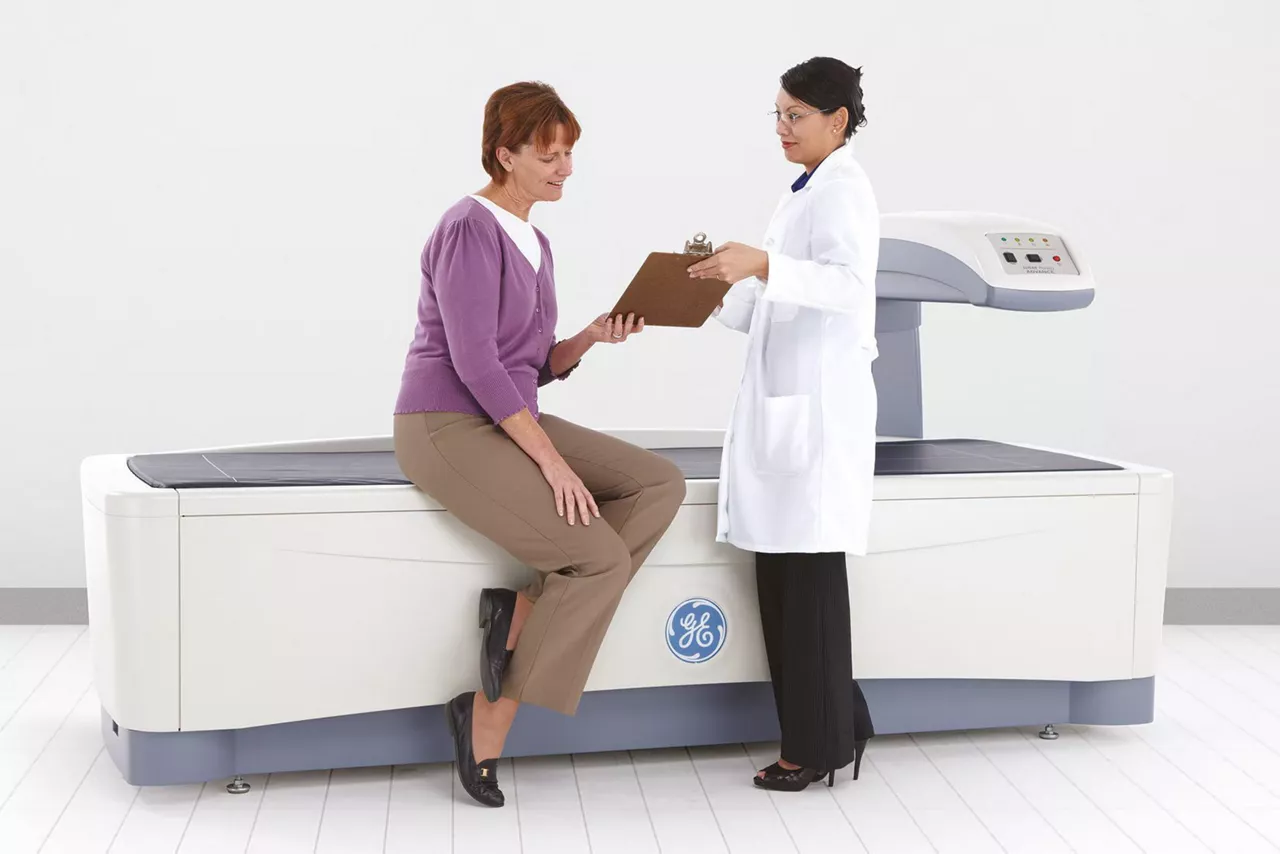
Bone density testing and fracture-risk assessment may be appropriate depending on age and risk factors.
Related: Osteoporosis in Women · Osteoporosis in Men · Bone Loss and Hormones · Menopause Treatment
Irregular Periods and Menstrual Changes
Changes in cycle length, flow or timing are common during perimenopause as ovarian hormone production becomes less predictable. But pregnancy, thyroid disease, uterine fibroids or polyps, medications, PCOS and other gynecologic conditions can also cause irregular bleeding.
Heavy bleeding, bleeding between periods, bleeding after sex or bleeding after menopause should be evaluated rather than assumed to be a normal hormone fluctuation.
Related: Perimenopause Treatment · Perimenopause vs. Menopause · Postmenopausal Bleeding
Hair Loss and Skin Changes
Hair thinning and skin changes may occur during hormonal transitions, but genetics, iron deficiency, thyroid disease, dermatologic conditions, medications, stress and nutrition are also common contributors. Testosterone treatment can sometimes worsen androgen-related hair loss in susceptible patients.
Related: Hair Loss and TRT · Thyroid Evaluation · Menopause Care
Common Hormone-Related Symptoms in Men
- Low libido or reduced sexual interest
- Reduced energy or stamina
- Loss of muscle mass or strength
- Increased body fat
- Erectile concerns
- Reduced motivation or mood changes
- Sleep problems
- Bone loss
These symptoms can occur with testosterone deficiency but are not diagnostic by themselves. Evaluation should consider sleep apnea, obesity, diabetes, medications, depression, thyroid disease and other causes.
Common Hormone-Related Symptoms in Women
- Hot flashes and night sweats
- Irregular menstrual cycles
- Sleep disruption
- Mood changes
- Brain fog or concentration changes
- Vaginal dryness or painful sex
- Urinary symptoms
- Changes in libido
- Bone loss
- Changes in body composition
These symptoms may occur during perimenopause and menopause, but other conditions can produce similar symptoms.
Symptoms Are Not a Diagnosis
Symptoms should guide evaluation, not predetermine treatment. Fatigue does not automatically mean low testosterone. Weight gain does not automatically mean thyroid disease. Low libido does not automatically mean a hormone deficiency. Brain fog does not automatically mean menopause.
The goal is to identify the most likely cause, confirm a hormone disorder when appropriate, and choose treatment based on the diagnosis.
How Hormone Deficiency Is Evaluated
An evaluation may include a detailed symptom history, medical and family history, medication and supplement review, physical examination when appropriate, and targeted laboratory testing. Not every patient needs the same hormone panel.
For suspected male hypogonadism, diagnosis requires compatible symptoms or signs together with consistently low, accurately measured testosterone concentrations. Menopausal symptoms are evaluated differently because hormone levels can fluctuate substantially during the menopause transition and routine hormone testing is not always necessary.
Related: Hormone Testing in Los Angeles
When Symptoms Need Prompt or Separate Evaluation
Some symptoms should not be attributed to hormones without appropriate assessment. Seek timely medical evaluation for postmenopausal bleeding, a new breast or testicular mass, severe or persistent chest pain, fainting, new neurologic symptoms, unexplained significant weight loss, severe depression, heavy menstrual bleeding, or other urgent or rapidly worsening symptoms.
Which Treatment Page Should I Read Next?
Physician-Led Hormone Evaluation in Los Angeles
David Nazarian, MD is Board-Certified with extensive experience in the treatment of hormone imbalances and hormone optimization. The practice takes a comprehensive, evidence-based approach to hormone-related symptoms, laboratory interpretation, risk assessment, treatment selection and follow-up.
Written and medically reviewed by David Nazarian, MD.